
Is the parabolic rise in silver running out of steam or just getting started? Ramalingam Kalirajan offers his take on if you should invest in silver now?

The bumper rise is due to the rising demand for the drug and patients' gradual shift towards its higher dosage.

Among Sensex firms, Tata Steel jumped the most by 5.90 per cent. Titan, Mahindra & Mahindra, ITC, Eternal, State Bank of India, and Trent were among the other gainers. However, Infosys, NTPC, Hindustan Unilever, TCS, Adani Ports and Bharti Airtel were among the laggards.

Hindustan Unilever Ltd's (HUL's) second quarter 2025-26 (Q2FY26) consolidated revenue rose 2 per cent to Rs 16,250 crore, with low or flat volume growth. Demand remained stable but goods and services tax (GST) transition and prolonged monsoon hurt offtake.

'We kept this Budget on a larger plank, rather than on one incident, however serious.'

Tier-II, Tier-III, and rural regions accounted for 62 per cent of all new health insurance policies sold by insurers so far in 2025-26 (FY26), according to a Policybazaar report. These regions are also witnessing a rise in the sum assured opted by customers.
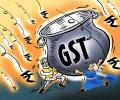
Gross GST collection grew 9 per cent to over Rs 1.87 lakh crore in October on higher revenues from domestic transactions. The Central GST collection stood at Rs 33,821 crore, State GST at Rs 41,864 crore, Integrated IGST at Rs 99,111 crore and cess at Rs 12,550 crore.

Among the Sensex firms, Mahindra & Mahindra jumped the most by 5.96 per cent. Bajaj Finance, Bajaj Finserv, Trent, ITC and HDFC Bank were also among the gainers. However, Maruti Suzuki India, Bharat Electronics, HCL Tech, NTPC, Power Grid, Infosys and Reliance Industries were among the laggards.

Mutual fund industry extended its bull run in 2025, adding a staggering Rs 14 lakh crore to its asset base and pushing total AUM to a record Rs 81 lakh crore by November, powered by surge in retail participation and record SIP inflows. Venkat Chalasani, chief executive officer of AMFI, told PTI that the industry's outlook remains positive, with steady SIP inflows continuing to offset foreign portfolio investor outflows and strengthening market resilience.

Goods and Services Tax (GST) collections in September, in gross terms, were at Rs 1.73 lakh crore, with a yearly jump of 6.5 per cent, according to data from finance ministry released on Tuesday. In September 2023, the total collection was to the tune of Rs 1.62 lakh crore. CGST, SGST, IGST, and cess all increased year-on-year in September, official data made available on Tuesday showed.

India's top eight housing markets saw a one per cent decline in sales during the July-September period to 95,547 units, mainly due to lower demand in Mumbai, Pune and Delhi-NCR, according to PropTiger. Real estate consultant PropTiger, recently acquired by listed entity Aurum PropTech Ltd, released its data on Wednesday for India's eight primary housing markets for the July-September quarter.

The government bond yield curve is likely to flatten in the financial year 2027 (FY27) as the Reserve Bank of India (RBI) is expected to ease supply pressure in the ultra-long segment. In FY26 so far, reduced investments by insurance companies and pension funds pushed up yields on ultra-long tenor securities, steepening the curve.

The insurance industry is trying to get to grips with provisions in the proposed Insurance Amendment Bill, which gives additional powers to the Insurance Regulatory and Development Authority of India (Irdai), while there is ambiguity in the very definition of the insurance business, according to industry experts.

Electric passenger vehicle (PV) retail sales jumped more than twofold in September with Tata Motors (TaMo) leading the pack having over 6,000 registrations and a 40 per cent market share.

The ministries of Road Transport & Highways and Railways have exceeded the national average capital expenditure (capex) by spending 63 per cent and 57 per cent of Budget estimates (BE), respectively, in the first half of 2025-26 (FY26). The total capital expenditure for April-September of FY26 stood at 52 per cent of the BE, according to the latest data by the Controller General of Accounts (CGA).

After two years of strong gains, smallcap stocks fell sharply in 2025, but the correction may be setting up opportunities for long-term investors.

The gross GST collection increased 8 per cent to Rs 1.74 lakh crore in June, sources said on Monday. The government, however, has discontinued the official release of monthly GST collection data, they added. Sources said the gross Goods and Services Tax (GST) collection so far this fiscal (April-June) stood at Rs 5.57 lakh crore.

Among Sensex firms, Bajaj Finserv, ICICI Bank, Reliance Industries, Bajaj Finance, Larsen & Toubro and Bharat Electronics were the major gainers. However, Power Grid, Eternal, Hindustan Unilever and Adani Ports were among the laggards.
Gross GST collections in August grew 10 per cent to about Rs 1.75 lakh crore, reflecting higher domestic consumption. As per the government data released on Sunday, gross GST revenues from domestic transactions grew 9.2 per cent to about Rs 1.25 lakh crore. Revenues from import of goods were up 12.1 per cent to Rs 49,976 crore.

Wholesale price inflation (WPI) softened to 0.13 per cent in September on easing in prices of food articles and manufactured items, government data showed on Tuesday. WPI-based inflation was 0.52 per cent in August and 1.91 per cent in September last year.

Foreign portfolio investors (FPIs) remained net sellers of Indian equities in September, withdrawing Rs 23,885 crore (around $2.7 billion) and taking year-to-date outflow to Rs 1.58 lakh crore ($17.6 billion).

In order to reduce government litigations, the Union Finance Minister Nirmala Sitharaman on Saturday said the GST Council has fixed a monetary limit for filing appeals by the tax department before the various appellate authorities. It has recommended a monetary limit of Rs 20 lakh for GST Appellate Tribunal, Rs 1 crore for the High Court and Rs 2 crore for the Supreme Court for filing of appeals by the department before these legal forums, she said after the 53rd GST Council meeting held in New Delhi.

Plans for big bang reforms in the GST regime by Diwali, the Putin-Trump summit and S&P upgrading India's sovereign credit rating are likely to instil optimism in the domestic equity market in the week ahead, analysts said. Besides, trends in global markets and the trading activity of foreign investors would also impact domestic investors' sentiment.

'...not merely in managing fiscal mathematics, but in demonstrating conservatism and prudence within that framework.' 'Looking forward, we believe sufficient growth drivers exist -- ranging from government reforms to revival in consumption to favourable monsoons. Numerous factors support the Indian economy.'

Multiple tailwinds for the automobile sector, including a cut in goods and services tax (GST) rates, are keeping analysts bullish on auto stocks from a long-term perspective, even as they see the rally running its course in the near term.

'Indian markets may underperform global peers for the next two quarters.' 'But beyond that, India should catch up and resume its long-term growth path.'

The country's industrial production grew at 4 per cent in August, mainly due to better performance by the mining sector, according to government data released on Monday.

After a subdued first quarter of 2025-26 (Q1FY26), banks are now betting big on the festive season, rolling out attractive loan offers to boost credit growth in the second half of the current financial year (H2FY26) - a trend likely to be further accentuated by the second-order effects of the good services tax (GST) cuts.

Younger customers should opt for increasing cover as their financial commitments are likely to rise in the future.

India's manufacturing sector activity eased in September, as new orders, output and input buying rose at the slowest rates in four months, while job creation retreated to one-year low, a monthly survey said on Wednesday.

India's mergers and acquisitions (M&A) activity cooled in the second quarter of 2025-26 (Q2FY26), with deal value falling to $26.26 billion from $29.04 billion a year ago, according to Bloomberg data.

From the Sensex firms, Infosys climbed 3.86 per cent. HCL Tech, Tata Consultancy Services, Axis Bank, Kotak Mahindra Bank, Titan and Tech Mahindra were also among the gainers. However, Eternal, UltraTech Cement, Bharti Airtel and Adani Ports were among the laggards.

Prime Minister Narendra Modi on Wednesday renewed his pitch for Make in India across sectors -- from mobiles to semiconductors and electronics, saying the government is accelerating the pace of reforms, offering the best investment opportunities.

The Indian government has expressed its disagreement with the IMF staff's 'baseline' assumption that the 50 per cent US tariffs on its goods exports 'would remain in place indefinitely', based on which the staff pegged the country's GDP growth at 6.6 per cent this year, and pared its 2026-27 projection by 20 basis points to 6.2 per cent.

Indication of a potential US Federal Reserve rate cut may trigger optimism in the domestic equity market, with investors' attention shifting to the looming deadline for additional US tariffs on Indian goods in a holiday-shortened week ahead, analysts said.

Among Sensex firms, Tata Motors rose the most by 3.97 per cent. Mahindra & Mahindra jumped by 3.96 per cent. Maruti, Adani Ports, Bajaj Finance and UltraTech Cement were also among the gainers. However, Trent declined 3.81 per cent. Asian Paints, HCL Tech, Tech Mahindra, L&T, TCS, Power Grid and Sun Pharma were also among the laggards.

India's brittle energy security is inextricably linked to two opposing paradigms - fossil fuels, and the transition to green energy. The first powers the present; the second paves the way for Viksit Bharat in 2047.

Among Sensex firms, Trent, Tech Mahindra, Hindustan Unilever, UltraTech Cement, Asian Paints, Eternal and ITC were the major laggards. Selling in HDFC Bank and ICICI Bank also dragged the key indices. However, Axis Bank, Bajaj Finance, Maruti and State Bank of India were among the gainers.
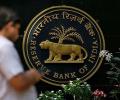
While participants in the domestic financial market are expecting a 25 basis-point policy repo rate cut in the December meeting of the Monetary Policy Committee (MPC) of the Reserve Bank of India (RBI), economists remain torn between a reduction in rate cut and a pause.

'Other sectors that manage the savings pools of Indians are giving tough competition to life insurance companies.'
